
Blind people and the workplace
The unemployment rate for blind people in the United States is over 60%. This probably has to do with the fact that our society is so visually oriented. People can’t imagine how they would function without sight – how life must be living blind (and in the dark) every day. Look at TV ads, websites, and Instagram, to mention a few mediums. If you think about it, blind people don’t have the same accessibility to these venues as do our sighted peers.
In the past I’ve had potential employers say to me, “Well, if I gave you a job, how would you get out of the building in case of a fire?”
My immediate thought was, hmm, I don’t know, how would you get out? I’d imagine I’d go away from the heat, smoke, and noise; just the same as you would.
Another potential employer said to me, “can you get down these stairs?” I wanted to laugh. I got up them, I think I can get down them.
I realize people who have never been around someone who is blind and don’t know what we can or can’t do. News flash – we can do anything you can, except we do things differently.
Whereas people in chairs need wheelchair ramps, wide doors, and other physical adaptations, blind people need accommodations that revolve around making technology/computers accessible via software that reads the computer screen. This software is always improving; yet, the more technical the task the more patient we have to be with the software. Blind people may need readers or a company called Aira to assist with tasks that require sight. These expenses may seem exorbitant; however, compared to physical environment adaptations and costs, these expenses are minimal.
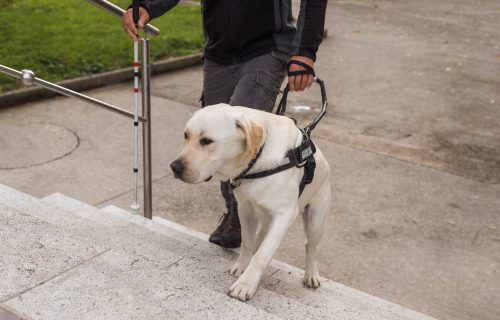
The only other difference in hiring a blind person versus a sighted person is to know that the blind person will take public transportation or special buses for people with disabilities to our job. This will not deter us from arriving on time; however, at times there may be conditions beyond our control which may make our arrival untimely. Just as you have traffic and weather conditions to consider when you drive to work, so will the public transportation systems. And, a blind person will be using either a white cane with a red tip or a guide dog for their mobility. These are personal choices and the blind person fully knows how to use these tools.
I think blind employees are more loyal, responsible, and reliable than our sighted counterparts. This has to do to the fact that we face discrimination and must educate people on a daily bases about our capabilities and worth. We know we can do the job; however, convincing our employer and coworkers we can is another story. Though talking about our disability is taboo, people still have their own biases and need to work through them on a conscious or subconscious level.
Someday, blind people will walk into an employer’s office and we will be seen as any other employee. Until that time, it is the employee’s job to gently educate the employer as to their needs, and it is the employer’s responsibility to see the applicant in the same light as they would see any other person applying for the job. As time goes by, both will be forever blessed for the opportunity of employing a blind person into the work force. “Try us, you might like us!”


Add A Comment